Published
Date: 27 May
2006 The
Scotsman By AURA SABADUS
AFTER 373 years
of pride, sacrifice and service, The
Royal Scots - the oldest
regiment in the British Army -
marked its passing yesterday with
an emotional march through
Edinburgh.
Large crowds
ignored the drizzle to pay tribute
to the regiment's proud history
while also hailing a new future as
a battalion. The Royal Scots will
merge later this year with the
King's Own Scottish Borderers to
form The Royal Scots Borderers,
1st Battalion The Royal Regiment
of Scotland.
The parade also celebrated the
return of active servicemen from
an operational tour in some of
Iraq's most dangerous hotspots.
Some 400 troops dressed in desert
combats, bayonets fixed and drums
beating, joined 200 veterans who
had travelled from all corners of
the country to take part in the
farewell ceremony.
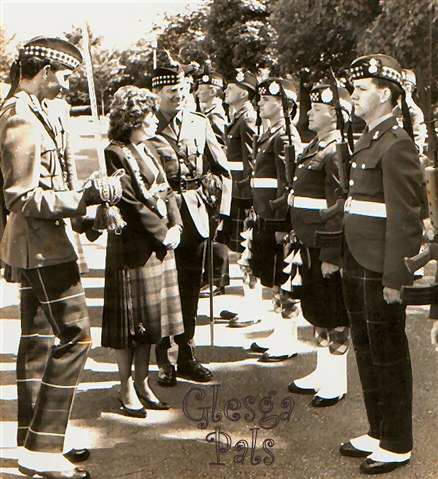
The Princess Royal, the
Colonel-in-Chief, took the salute
from the steps of the Royal
Scottish Academy, watching the
procession marching with colours
flying down Princes Street.
The parade included the
Territorial Army and cadets, as
well as affiliated regiments such
as the Canadian Scottish and Royal
Newfoundland Regiments and the
Royal Gurkha Rifles.
Leading the veterans' Old and Bold
march, Lieutenant-General Sir
Robert Richardson, the regiment's
former colonel, said the "golden
thread" linking the past and more
than three centuries of
"unrivalled tradition, service and
comradeship, courage and loyalty
to crown and country" will be
preserved through to the future.
"The Jock is second to none and
admired throughout the world. One
request to my old comrades and
those serving today: treasure the
past, draw strength from it but do
not live in it. The old days are
gone, never to return. Embrace the
future," the general said.
But despite Sir Robert's
encouraging words, a sense of
regret and nostalgia dominated the
ceremony, as active and retired
servicemen felt that centuries of
proud traditions and loyal
comradeship were being lost
forever as The Royal Scots ceased
to be an independent regiment.
The Royal Scots, the oldest
Regiment of the Line, was formed
in 1633 when Sir John Hepburn,
under a Royal Warrant given by
King Charles I, raised a body of
men in Scotland for service in
France.
Nicknamed Pontius Pilate's
Bodyguard after an argument with
the French Regiment of Picardie
over who would have guarded
Christ's tomb best, The Royal
Scots were posted to Tangiers in
North Africa, where they won their
first Battle Honour. On the
regiment's return four years
later, the title "The Royal
Regiment of Foot" was conferred by
Charles II.
Battalions of The Royal Scots have
been involved in almost every
campaign in which the British Army
has fought, from Marlborough's
battles in the Napoleonic Wars to
the Crimea and South Africa.
During the Great War more than
11,000 were killed and more than
40,000 wounded.
After 1945 the regiment continued
to serve in many parts of the
world, including Germany, Korea,
Cyprus, Suez, Aden and Northern
Ireland and in 1983 it celebrated
350 years of history, with the
Princess Royal being appointed
Colonel-in-Chief.
The major defence shake-up which
created the Scottish
super-regiment was billed by the
UK government as a move to
modernise Britain's armed forces,
but many in the crowd yesterday
denounced it as a penny-pinching
bonfire of tradition.
Major Steve Simson, who joined The
Royal Scots in 1948 at the same
time as General Richardson, said
he and the unit's former colonel
exemplified the deep bonds and
sense of family that had been
forged within the regiment
throughout the years.
Like Major Simson and General
Richardson, Danny Malloy and Bill
Scally travelled to Edinburgh to
meet their comrades and bid
farewell to their regiment.
Dressed in the battalion's tartan,
Mr Scally, 84, a Normandy veteran,
did not march with his comrades
but watched the parade as it
proceeded from East Market Street
to King's Stables Road, where it
disbanded.
"I couldn't stay at home. This day
was far too special," he said.
Mr Malloy, from West Calder, in
Midlothian, said: "It's a very sad
day today," as tears rolled down
his cheeks.
James Jack, 92, the regiment's
oldest member, refused to stay at
home, braving the rain in his
wheelchair. But his determination
to meet his comrades was rewarded
when the Princess Royal stopped to
talk to him.
The member of the Second
Battalion, who had been captured
by the Japanese, said: "The Royal
Scots was a great regiment and I
met some very fine men during my
service."
Norman Soutar, a former Royal Scot
who served in the first Gulf war,
said marching along Princes Street
with the regiment for the last
time was "a very sad moment".